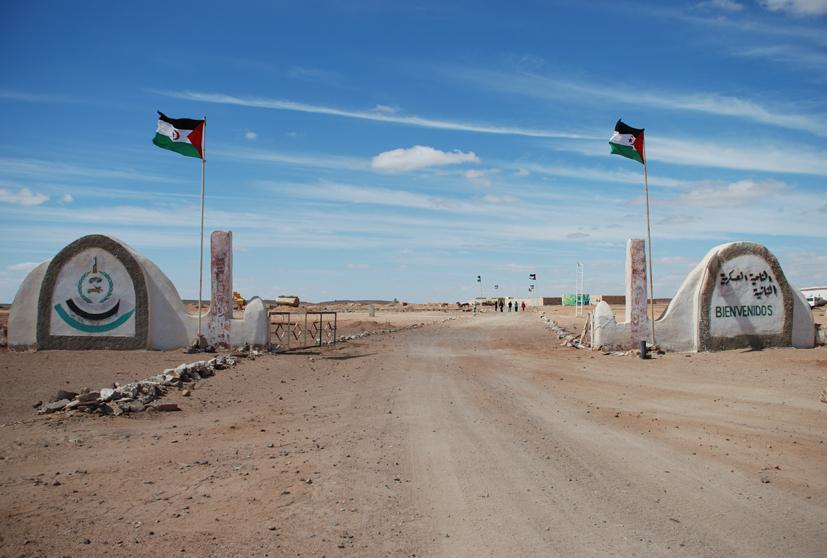
The end of MINURSO’s mandate raises serious concerns about the future of the peace process and the international community’s responsibility to ensure the rights of the Sahrawi people.
.
Sine Qua Non expresses concern over the United Nations Security Council’s failure to reach an agreement on renewing the mandate of the United Nations Mission for the Referendum in Western Sahara (MINURSO), which expired on 31 October 2026.
The Security Council’s inability to agree on the mission’s continuation represents a significant setback for international efforts to maintain peace, facilitate dialogue, and advance a lasting settlement of a conflict that has remained unresolved for more than five decades.
An Unfinished Decolonisation Process
Western Sahara has been included on the United Nations list of Non-Self-Governing Territories since 1963. Its decolonisation process remains unfinished, and the Sahrawi people’s right to self-determination remains the essential legal framework for any legitimate settlement.
In its Advisory Opinion of 16 October 1975, the International Court of Justice concluded that the historical ties examined did not establish territorial sovereignty capable of overriding the principle of self-determination through the free and genuine expression of the will of the people of Western Sahara.
The expiration of MINURSO’s mandate does not alter this legal framework or extinguish the right to self-determination. Nor does it resolve the territory’s final status.
Preserving Dialogue and International Engagement
The absence of agreement within the Security Council raises concerns about the continuity of international monitoring, the protection of civilian populations, and the conditions necessary for a peaceful settlement.
Sine Qua Non considers that political negotiations remain essential to resolving the conflict. However, any negotiated solution must be consistent with international law and respect the freely expressed will of the Sahrawi people.
The organisation therefore encourages the continuation of diplomatic efforts under the auspices of the United Nations Secretary-General and his Personal Envoy, with the participation of the parties concerned.
The Continuing Responsibility of the United Nations
The current impasse highlights the importance of preserving the United Nations’ engagement in unresolved decolonisation processes.
Sine Qua Non calls upon the United Nations Security Council, the Secretary-General, the General Assembly, and other competent UN bodies to continue exercising their respective responsibilities under the UN Charter, including exploring appropriate mechanisms to maintain international engagement, support negotiations, protect human rights, and advance the decolonisation process.
The organisation also underlines the importance of safeguarding the rights of civilian populations and ensuring continued humanitarian assistance to those affected by the prolonged conflict, including Sahrawi refugees.
The failure to renew a United Nations mission must not become the abandonment of an unfinished decolonisation process. The international community has a continuing responsibility to ensure that the right to self-determination remains not only recognised in international law, but genuinely exercisable.
Sine Qua Non reaffirms its commitment to peaceful conflict resolution, international cooperation, and the protection of fundamental rights as essential foundations for a just and lasting settlement in Western Sahara.
Photo: Hospital in Tifariti, Western Sahara (2009). Jørn Sund-Henriksen / Wikimedia Commons (CC BY-SA 3.0).